


 Use Cases
 Jul 8, 2026
PEP Background Checks — Find Politicians and Government Officials from a Photo
Author: Kinga Jasińska
'/%3e%3cdefs%3e%3clinearGradient%20id='paint0_linear_922_28039'%20x1='3.50477e-05'%20y1='9.06665'%20x2='1497.61'%20y2='1154.15'%20gradientUnits='userSpaceOnUse'%3e%3cstop%20stop-color='%23B7FF91'/%3e%3cstop%20offset='0.35'%20stop-color='%23B7FF91'%20stop-opacity='0'/%3e%3cstop%20offset='0.417579'%20stop-color='%23B7FF91'%20stop-opacity='0'/%3e%3c/linearGradient%3e%3c/defs%3e%3c/svg%3e)
'%3e%3cpath%20d='M15%200.015625C15.009%208.29226%2021.7213%2014.999%2030%2014.999C21.7248%2014.999%2015.0148%2021.7%2015%2029.9717C14.9852%2021.7%208.27516%2014.999%200%2014.999C8.27874%2014.999%2014.991%208.29226%2015%200.015625Z'%20fill='%23A5DCFF'/%3e%3c/g%3e%3cg%20clip-path='url(%23clip1_961_20831)'%3e%3cpath%20d='M45%206.00781C45.0053%2010.9739%2049.0327%2014.998%2054%2014.998C49.0301%2014.998%2045.0011%2019.0264%2045%2023.9961C44.9989%2019.0264%2040.9699%2014.998%2036%2014.998C40.9673%2014.998%2044.9947%2010.9739%2045%206.00781Z'%20fill='%23D1DFFF'/%3e%3c/g%3e%3cg%20clip-path='url(%23clip2_961_20831)'%3e%3cpath%20d='M64.2002%2010.8037C64.2023%2013.049%2065.9658%2014.8817%2068.1836%2014.9941L68.3994%2015C66.0856%2015.0002%2064.2093%2016.8709%2064.2002%2019.1826C64.1914%2016.9432%2062.4295%2015.117%2060.2158%2015.0049L60%2015C62.3181%2014.9999%2064.198%2013.1214%2064.2002%2010.8037Z'%20fill='%23D1DFFF'/%3e%3c/g%3e%3cdefs%3e%3cclipPath%20id='clip0_961_20831'%3e%3crect%20width='30'%20height='30'%20fill='white'/%3e%3c/clipPath%3e%3cclipPath%20id='clip1_961_20831'%3e%3crect%20width='18'%20height='18'%20fill='white'%20transform='translate(36%206)'/%3e%3c/clipPath%3e%3cclipPath%20id='clip2_961_20831'%3e%3crect%20width='8.4'%20height='8.4'%20fill='white'%20transform='translate(60%2010.8008)'/%3e%3c/clipPath%3e%3c/defs%3e%3c/svg%3e)
Who is a PEP?
Politically exposed persons (PEPs), are people who hold or have held important public positions. They may be vulnerable to abuse for corruption, bribery, money laundering, or terrorist financing.
PEPs include politicians, government officials, judges, military leaders, party officials, executives of state-owned companies, and people connected to them through family or close business relationships.
PEP checks — then vs. now
Traditional PEP checks often depended on names and documents — manual searches. It’s still a good solution, but sometimes there’s a problem: what if the person can’t be found through these means? Similar names, fake identities, fraudulent documents all might skew the results of an investigation. Besides, there are cases where answers are needed quickly. Research takes time and resources.
That is where photo-based PEP background checks can help.
What Is a PEP Background Check?
A PEP background check is the process of checking whether a person is, or may be connected to, a politically exposed person. EU anti-money laundering rules require companies to check, based on risk, whether a customer or beneficial owner is a politically exposed person.
A standard PEP check may include:
- Name screening
- Sanctions screening
- Media checks
- Relationship and close associate checks
- Risk scoring
Find politicians from a photo
Pixalytica allows companies to search for people from a face photo. Instead of relying only on names and keywords, Pixalytica can help find where a person’s face appears online and connect that image to public information, possible names, public roles, risk indicators etc.
With Pixalytica, you can check:
- Politicians
- Ministers and deputy ministers
- Members of parliament
- Mayors and local government officials
- Judges and senior legal officials
- Military or police leadership
- State-owned company executives
- Political party representatives
- Public institution leaders
- Family members or close associates of high-risk individuals
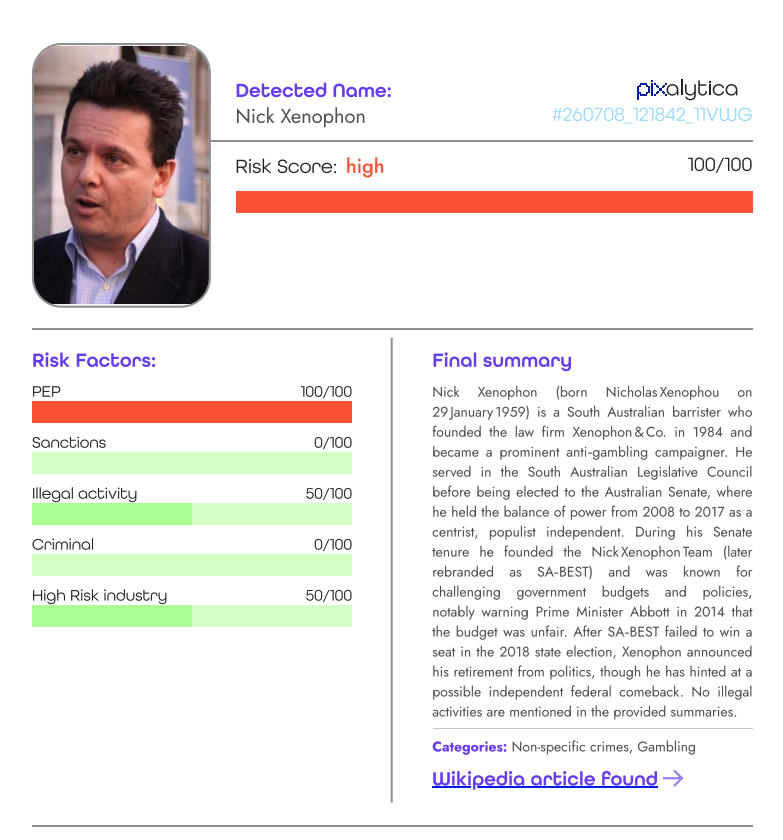
How to use Pixalytica?
Upload a photo - Choose a clear face photo and upload it to Pixalytica.
Start the search - Pixalytica analyzes the face and searches available online sources for matching information.
Review the results - Download the generated report. Pixalytica’s reports show possible matches, related pages, and public information connected to the person in the photo.
Check the report - Pixalytica can help find names, PEP status, sanctions, PEP connections and other relevant risk indicators.
Use the insights carefully - Review the results before making any decision.
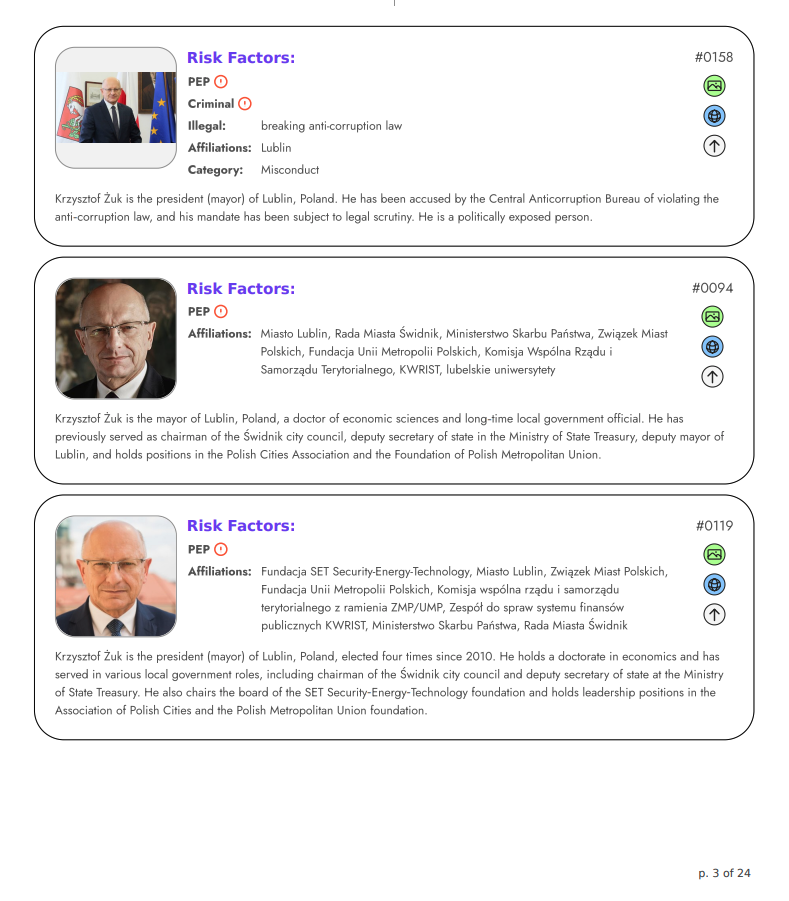
Why choose Pixalytica for PEP background checks?
Pixalytica helps compliance teams background check people using a face photo — not just a name. It uses facial recognition to find information about any person online. It’s quick, accurate and unlike anything else on the market.
Use Pixalytica's Demo to Test the Service!
With Pixalytica, teams can:
- Start a background check with a photo
- Find possible PEP faster
- Check for political exposure
- Support KYC and AML checks
- Save time on manual research
- Improve fraud prevention
Final thoughts
PEP background checks are important for compliance. If identity data is lacking, important information can be missed.
A face photo can help find public appearances, connected names, government roles, media mentions, and other details that may not appear in a simple name search.
Pixalytica helps businesses find politicians, government officials, and other politically exposed persons from a face photo. It gives compliance teams a faster way to support KYC, AML, fraud prevention, and enhanced due diligence.