


 Use Cases
 Apr 22, 2026
Facial Recognition for Background Checks in High-Risk Industries
Author: Kinga Jasińska
'/%3e%3cdefs%3e%3clinearGradient%20id='paint0_linear_922_28039'%20x1='3.50477e-05'%20y1='9.06665'%20x2='1497.61'%20y2='1154.15'%20gradientUnits='userSpaceOnUse'%3e%3cstop%20stop-color='%23B7FF91'/%3e%3cstop%20offset='0.35'%20stop-color='%23B7FF91'%20stop-opacity='0'/%3e%3cstop%20offset='0.417579'%20stop-color='%23B7FF91'%20stop-opacity='0'/%3e%3c/linearGradient%3e%3c/defs%3e%3c/svg%3e)
'%3e%3cpath%20d='M15%200.015625C15.009%208.29226%2021.7213%2014.999%2030%2014.999C21.7248%2014.999%2015.0148%2021.7%2015%2029.9717C14.9852%2021.7%208.27516%2014.999%200%2014.999C8.27874%2014.999%2014.991%208.29226%2015%200.015625Z'%20fill='%23A5DCFF'/%3e%3c/g%3e%3cg%20clip-path='url(%23clip1_961_20831)'%3e%3cpath%20d='M45%206.00781C45.0053%2010.9739%2049.0327%2014.998%2054%2014.998C49.0301%2014.998%2045.0011%2019.0264%2045%2023.9961C44.9989%2019.0264%2040.9699%2014.998%2036%2014.998C40.9673%2014.998%2044.9947%2010.9739%2045%206.00781Z'%20fill='%23D1DFFF'/%3e%3c/g%3e%3cg%20clip-path='url(%23clip2_961_20831)'%3e%3cpath%20d='M64.2002%2010.8037C64.2023%2013.049%2065.9658%2014.8817%2068.1836%2014.9941L68.3994%2015C66.0856%2015.0002%2064.2093%2016.8709%2064.2002%2019.1826C64.1914%2016.9432%2062.4295%2015.117%2060.2158%2015.0049L60%2015C62.3181%2014.9999%2064.198%2013.1214%2064.2002%2010.8037Z'%20fill='%23D1DFFF'/%3e%3c/g%3e%3cdefs%3e%3cclipPath%20id='clip0_961_20831'%3e%3crect%20width='30'%20height='30'%20fill='white'/%3e%3c/clipPath%3e%3cclipPath%20id='clip1_961_20831'%3e%3crect%20width='18'%20height='18'%20fill='white'%20transform='translate(36%206)'/%3e%3c/clipPath%3e%3cclipPath%20id='clip2_961_20831'%3e%3crect%20width='8.4'%20height='8.4'%20fill='white'%20transform='translate(60%2010.8008)'/%3e%3c/clipPath%3e%3c/defs%3e%3c/svg%3e)
What are high-risk industries? Definition and examples.
High-risk industries are business sectors that have a high chance of fraud, legal issues, financial loss, or security threats.
They often handle large transactions, operate in markets that are not well-regulated, and are victims of online scams and data leaks. High-risk industries deal with strict compliance requirements and identity verification challenges just to “stay afloat”.
High-risk industries include:
- Cryptocurrency/Blockchain
- Gambling and Casinos
- Forex and Trading
- Betting Platforms
What is Facial Recognition?
Facial recognition is a technology that uses a person’s face to identify or verify who they are.
It works by analyzing facial features: the distance between the eyes, the shape of the nose, or the outline of the jaw. These features are turned into a digital “pattern” - a set of numbers called a vector. This pattern is then compared to other images in a database to find a match.
Simply said: Advanced software scans the face and compares it to other faces in the database.
How are these “facial databases” made?
Facial databases are created by collecting and storing images of people’s faces, then turning those images into data that computers can understand and compare.
- Bots called “crawlers” go from page to page looking for photos
- They save the photos they found (both as an image and as a vector - the vector that is a unique number for every face)
- The vectors are compared by the software - the closer the two vectors are, the more likely the face belongs to the same person.
Need more information? Check out this article: How does facial recognition work?
What is a background check?
A background check is a process used to verify information about a person - checking their name, occupation, personal history etc. It is done to prevent possible fraud, learn more about the person, or make a decision of whether to trust them or not.
Where Background Checks meet Facial Recognition | Pixalytica
Facial recognition is a technology that uses a person’s face to verify their identity. In background checks, it can be used to find people whose names are hidden or ensure the person is who they claim they are.
Why traditional Background Checks are not enough
Standard background checks usually include ID verification, name search, criminal records, and reference checks. While helpful, they have some limits:
- People can use fake or stolen identities
- Some records may be outdated or missing
- Facial recognition requires only a photo of a person, making the process versatile
In high-risk industries, it’s important to check all the possible sources.
Pixalytica as a Face-Search-Based Background Check tool
Pixalyica is a background check tool that finds images of people in different locations online, and generates reports based on the data it found. It scans through publicly available websites to find matches for any face uploaded by the user.
How Facial Recognition on Pixalytica improves Background Checks
Facial recognition on Pixalytica makes the screening process fast and reliable. Pixalytica allows users to:
- Confirm identity quickly
- Detect identity fraud
- Match faces with criminal or watchlist databases
- Verify candidates during remote hiring
What do Pixalytica’s reports contain?
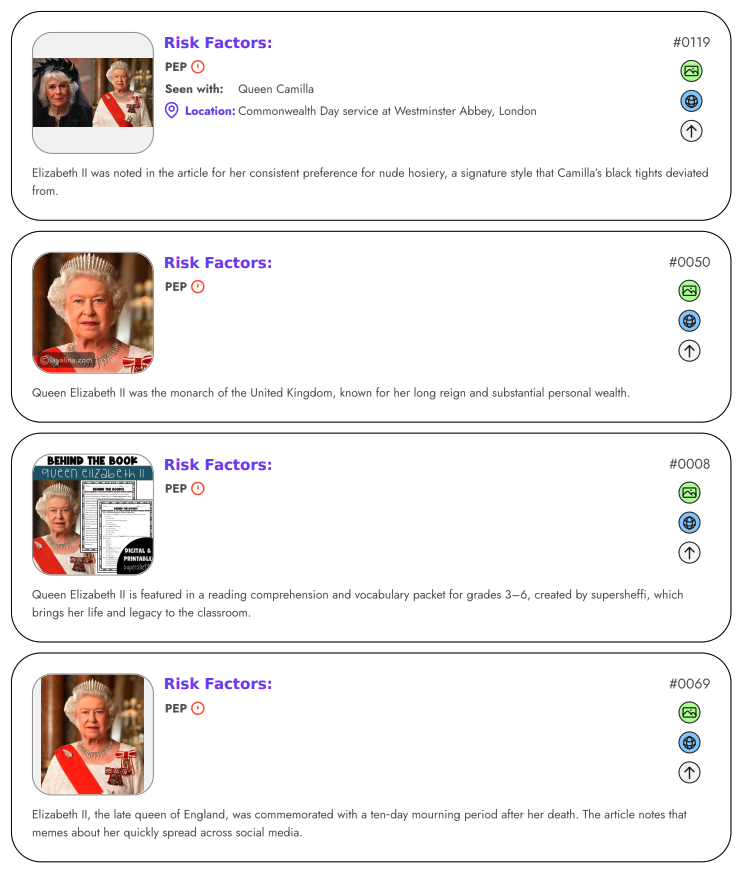
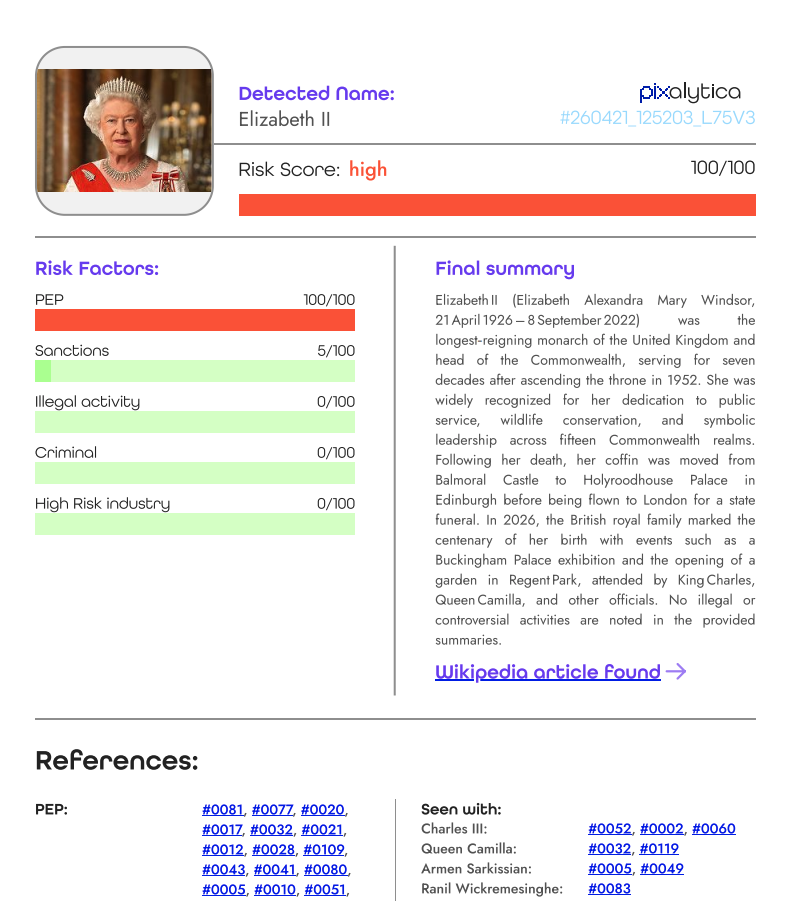
Pixalytica’s reports have information on:
- The real name of a person
- Locations the person was seen in
- Affiliations with criminals or politicians
- Possible fraud and criminal activities
- Fraud score (0-100 based on how unsafe the person might be)
Summing up
Pixalytica is the right tool to choose for dealing with clients and employees in high-risk industries. Thanks to its fast and accurate facial search reports, it scans the web in seconds and returns results, even without a name given.